Best Dog Food for German Shepherd Puppies
Large-breed growth rules, calcium limits and calorie counts decide more than the bag's photo. We compare label data for German Shepherd puppy foods so you can read any bag with confidence.
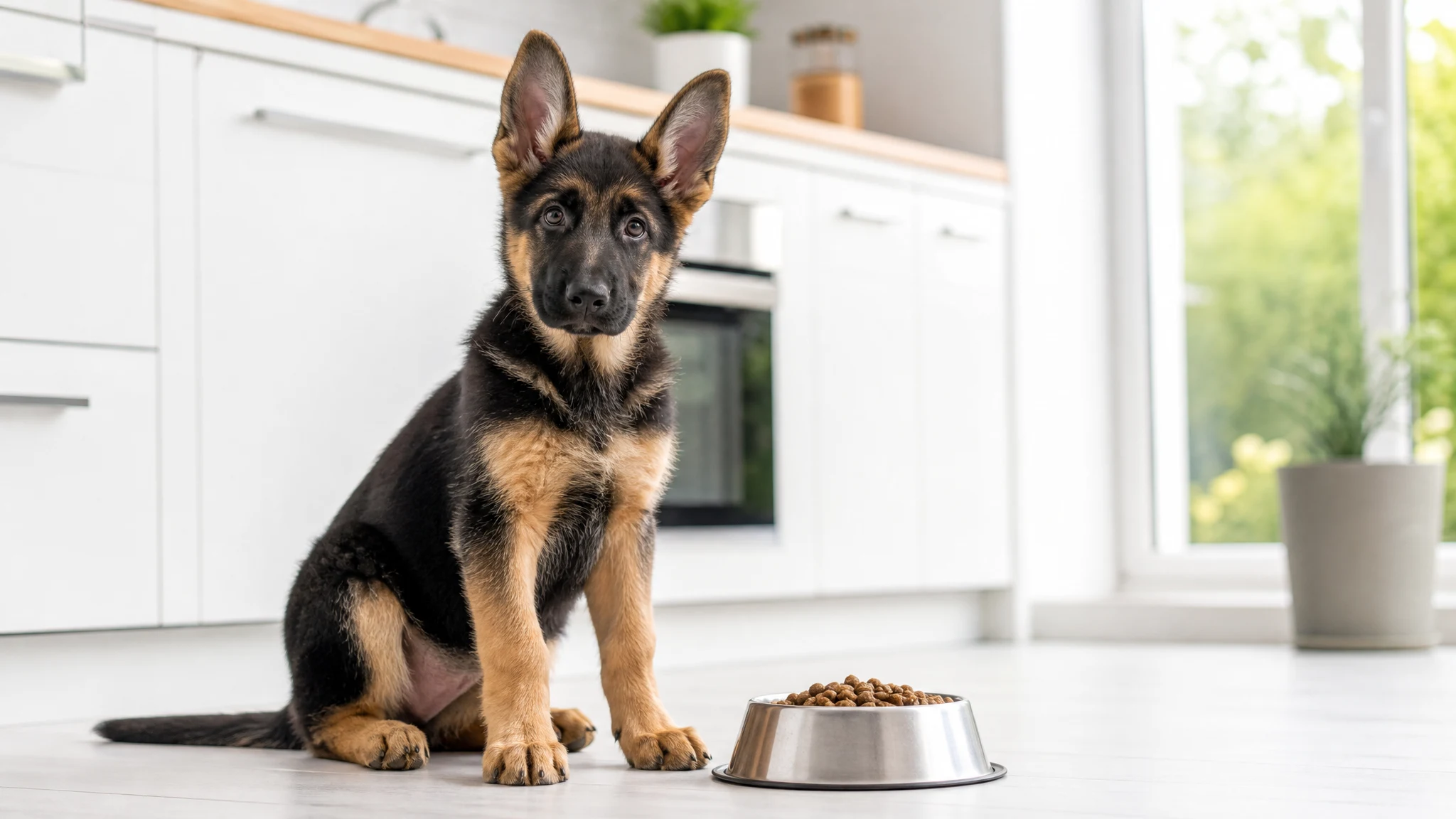
Puppy Food Guides
Read how to decode a label, what large-size growth means, and how the foods we list compare.
Best foods
Foods compared by label data: AAFCO statement, protein, fat and calories.
- Dry Food for a German Shepherd Puppy: Kibble Size and Why It Matters
- Best Dry Food for a German Shepherd Puppy, Compared by Label
- Questions to Ask Your Vet About German Shepherd Puppy Food
- What 'Vet Recommended' Means for German Shepherd Puppy Food
- Royal Canin German Shepherd Puppy Food vs Large-Breed Puppy Formulas
Feeding
How much and how often to feed, by age and weight.
- Feeding Prep Mistakes New German Shepherd Puppy Owners Make
- How to Prepare and Store Food for a German Shepherd Puppy
- Preparing Your German Shepherd Puppy's First Feeding Routine
- Free Printable Feeding Chart for a German Shepherd Puppy
- Reading a Dog Food Feeding Chart: What the Numbers Mean for a German Shepherd Puppy
Nutrition and health
The diet questions that matter for this breed.
- Homemade Food for a German Shepherd Puppy: What Vets Say About the Risks
- Signs Your German Shepherd Puppy's Food Isn't a Good Fit
- What Makes Food Good for a German Shepherd Puppy's Growth
- Switching Food for a German Shepherd Puppy Without Stomach Upset
- Food for a German Shepherd Puppy: The Nutrients That Matter Most
Foods for German Shepherd Puppies, compared by label
Protein and fat as each brand publishes them: guaranteed minimums from the label (as fed), or the dry-matter averages some brands publish instead, marked as such. We compare labels; we do not run feeding trials. Your veterinarian should choose the food for a dog with a health condition.
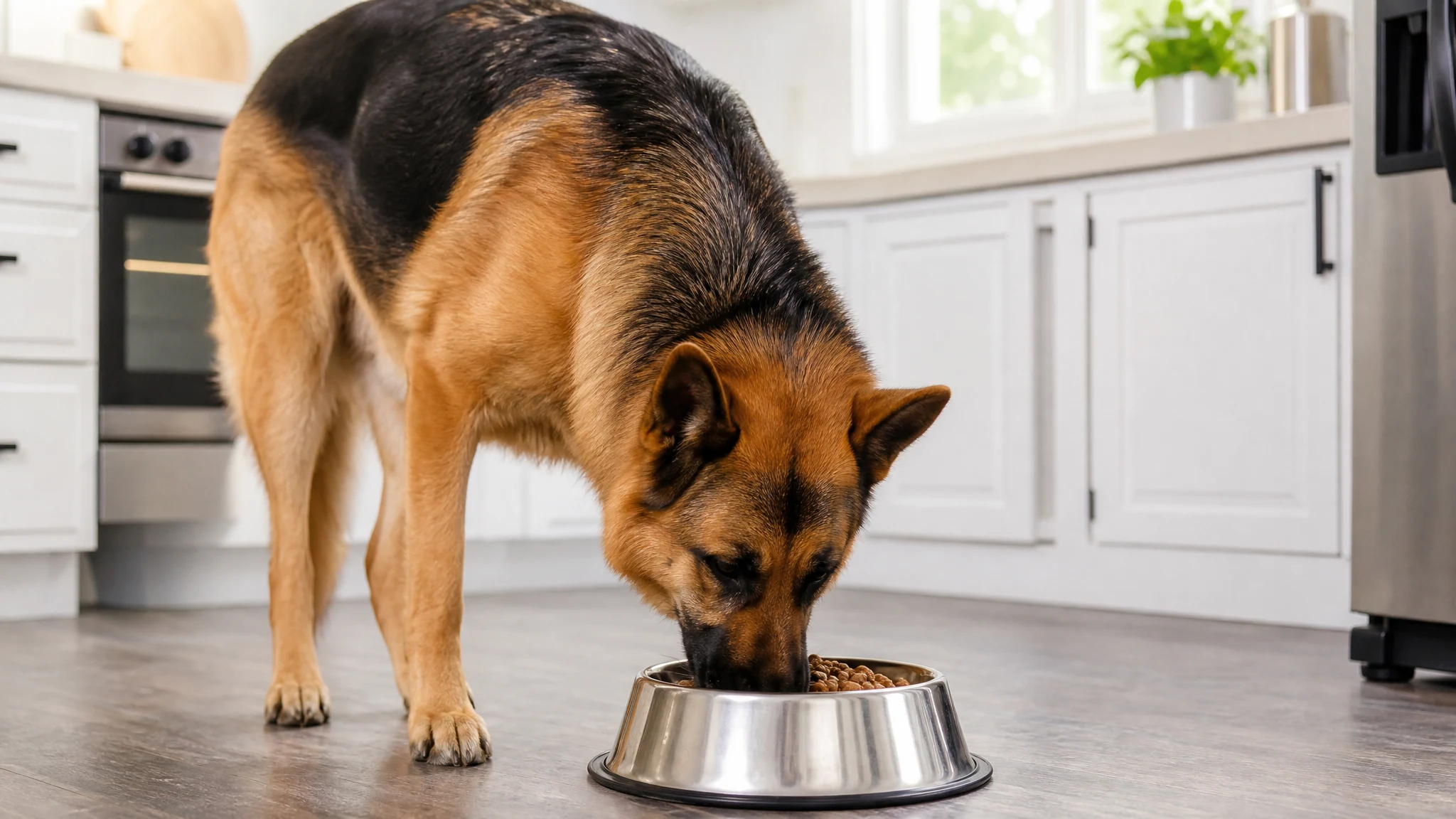
| Food | Form | Life stage | Protein / fat | Calories |
|---|---|---|---|---|
| Royal Canin German Shepherd Puppy Dry Dog Food (Breed Health Nutrition) | dry | puppy, growth including large size dogs (8 weeks to 15 months per the retail search summary; the opened page gives feeding amounts for ages 2 to 12 months) | 28.0% / 14.0% | 331 kcal ME per cup, as fed, calculated |
| Hill's Science Diet Puppy Large Breed Chicken & Brown Rice Recipe Dog Food | dry | puppy (large breed, expected adult weight over 55 lb, up to 18 months per the search summary) | not published | 387 kcal per cup (3591 kcal/kg) |
| Hill's Science Diet Puppy Large Breed Lamb Meal & Brown Rice Recipe Dog Food | dry | puppy (large breed, adult weight over 55 lb, up to 18 months) | not published | 378 kcal per cup |
| Hill's Science Diet Puppy Chicken & Brown Rice Recipe Dog Food | dry | puppy and gestating or lactating adult females (not large-breed specific) | not published | 390 kcal per cup (3721 kcal/kg) |
| VICTOR Hi-Pro Plus Large Breed Puppy | dry | all life stages including growth of large size dogs (sold as large breed puppy) | 30% / 14.0% | 365 kcal per cup (3560 kcal/kg) |
| VICTOR Grain Free Active Dog & Puppy | dry | all life stages including growth of large size dogs | 33.0% / 16.0% | 384 kcal per cup (3614 kcal/kg) |
| Nom Nom Pork Potluck | fresh (gently cooked, shipped frozen or cold) | all life stages including growth of large size dogs (70 lb or more as adult) | 8% / 5% | 246 kcal per cup (calculated) |
| Nom Nom Turkey & Chicken Cookout | fresh (gently cooked, shipped frozen or cold) | all life stages including growth of large dogs (70 lb or more as adults) | 7% / 5% | 254 kcal per cup (calculated) |
| Freshpet Vital Chicken Recipe with Peas, Carrots & Brown Rice | fresh (refrigerated roll) | all life stages including growth of large size dogs | 9.5% / 7% | unknown per cup; 1363 kcal/kg and 309 kcal per 1/2 lb (calculated) |
| Freshpet Vital Chicken Recipe with Whole Grains & Green Beans | fresh (refrigerated roll) | all life stages including growth of large size dogs | 14% / 11% | 296 kcal per cup (930 kcal per lb, calculated ME) |
| JustFoodForDogs Chicken & Rice Recipe (frozen, 18 oz pack) | fresh (frozen) | all life stages including growth of large size dogs | 8.0% / 3.0% | unknown per cup; 1,530 kcal/kg (43 kcal/oz), 774 kcal per 18-oz pack |
What matters when feeding German Shepherd Puppies
Breed facts that change what and how much to feed, with sources.
| Adult weight | 50 to 90 pounds (males heavier). A second source says 50-90 pounds too. The parent club and AKC pages gave no figure. source |
| Size | large source |
| Life expectancy | Sources conflict: Chewy says 12-14 years; Hill's says 7 to 10 years. Writers should say roughly 10 to 14 years only if they cite both, or avoid a single number. source |
| Switch to adult food | Not stated for the breed. Hill's food life-stage navigation lists Adult as 12 Months - 7 Years (generic, not German Shepherd specific). Large breeds are commonly switched later, but no opened vet or club source gave a month figure. source |
| Diet-related health topics | Breed is prone to developmental joint disorders; OFA says calorie intake is an environmental factor and keeping the dog from becoming overweight reduces stress on the hips. Chewy cites an OFA estimate of about 20% of German Shepherds with hip dysplasia (secondhand, OFA breed table not opened). | Prevent overweight to… source |
German Shepherd Puppy Food Questions
What should the label say for a German Shepherd puppy?
Look for an AAFCO statement for growth, ending with "including growth of large size dogs (70 lb. or more as an adult)". German Shepherd puppies can reach or approach 70 pounds, so the "except for" wording is the one to avoid. Whole Dog Journal recommends the "including" wording.
Why does calcium matter in puppy food?
Hill's says puppy formulas with controlled calcium and phosphorus support skeletal development. Whole Dog Journal warns that too much calcium can cause bone and joint abnormalities in large-breed puppies, which it defines as dogs likely to mature above 70 pounds. Ask your veterinarian how this applies to your puppy.
Does how I feed matter as much as what I feed?
The Merck Veterinary Manual lists German Shepherd Dogs as an at-risk breed for bloat (gastric dilatation-volvulus). Its listed risk factors include once-daily feeding, dry kibble only and fast eating, and it advises several small meals. Your veterinarian can help set a schedule for your puppy.
Should I worry about grain-free puppy food?
FDA's last public update on its diet and dilated cardiomyopathy (DCM) investigation was December 23, 2022. FDA has not established a causal link between specific diets and DCM, and said it does not intend to release further updates until there is meaningful new scientific information. Talk to your veterinarian about grain-free labels.
How do you compare foods, and how much should I feed?
We compared label data only: AAFCO statements, first ingredients, calories per cup and brand feeding guides. We did not run feeding trials or taste tests. Feeding charts are starting points. Hill's says to adjust amounts to maintain healthy weight, and the Orthopedic Foundation for Animals says preventing overweight lessens stress on the hips.
How we compare foods
We read each food's published label: the AAFCO nutritional adequacy statement, the guaranteed analysis, the calorie statement and the ingredient list, from the brand's own page. We note which life stage each food is formulated for and whether it covers large-breed growth. We do not test foods on dogs, accept payment from brands or earn commission on these foods. More on our method.
General nutrition information compiled from product labels and published sources, not veterinary advice. Your veterinarian is the right person to choose a diet for your dog, especially one with a health condition.