What 'Vet Recommended' Means for German Shepherd Puppy Food
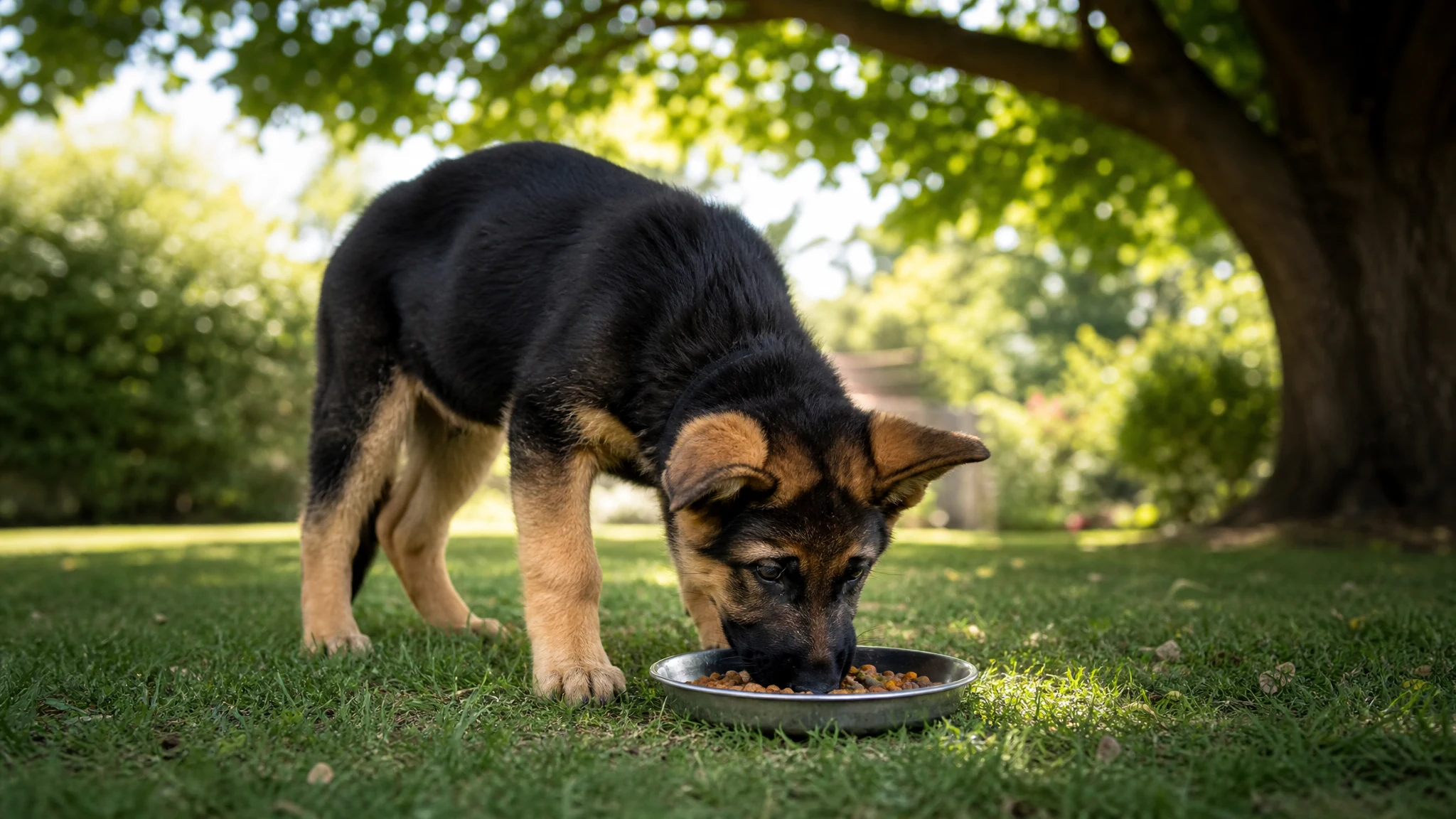
General nutrition information compiled from product labels and published sources, not veterinary advice. Your veterinarian is the right person to choose a diet for your dog, especially one with a health condition.
You will see "vet recommended" on bags, websites and ads. It sounds like a safety stamp. It is not one. No rule defines it, and a brand can use it without telling you which vet, how many, or why.
This guide shows you how to turn that vague phrase into something you can check. The goal is a vet recommended dog food for German Shepherd puppy decisions that rests on the label and on your own veterinarian's advice, not on a slogan.
We compared label data only. We did not run feeding trials or taste tests, and we are not saying any food is better for your puppy.
Why the phrase needs a closer look
"Vet recommended" can mean many things. A company may have surveyed some vets. A vet may have been paid to endorse it. A clinic may simply sell it. None of those tells you whether the food suits a fast-growing large-breed puppy.
The label is different. The nutritional adequacy statement, the ingredient list and the guaranteed analysis follow set formats. They give you facts you can compare.
German Shepherds are a large breed. The Hill's Pet Nutrition breed page lists adult weight at roughly 50 to 90 pounds, with males heavier. Puppies that grow that big have different needs from a small-breed puppy, so size-specific labeling matters.
Materials you need
- The bag or the brand's official product page for each food you are considering
- A notepad or phone note to record label details side by side
- Your puppy's current weight and age
- A list of questions for your veterinarian
- A kitchen scale or measuring cup, if you plan to follow a feeding guide
Step-by-step: how to check a "vet recommended" claim
Step 1: Ask who is doing the recommending
Look for a plain explanation on the package or brand page. Does it name a group, a study or a process? Or does it only use the phrase?
If you cannot find a clear answer, treat the phrase as marketing. Check with the brand if you want details. Do not assume anything about who recommended it.
Step 2: Find the adequacy statement
This is the most useful sentence on the bag. It says whether the food is complete and balanced and for which life stage. It usually follows the words "formulated to meet" or "animal feeding tests using AAFCO procedures substantiate."
For a German Shepherd puppy, you want a statement covering growth. A food for adult maintenance only does not fit a puppy.
Step 3: Look for the large-size growth wording
Since a 2016 AAFCO change, a food claiming growth or all life stages must end its statement one of two ways. It either says "including growth of large size dogs (70 lb. or more as an adult)" or "except for growth of large size dogs (70 lb. or more as an adult)." This is described in state rules that mirror AAFCO, such as Kentucky Administrative Regulation 012 KAR 003:039.
German Shepherd puppies can reach or approach 70 pounds as adults. Whole Dog Journal recommends choosing the "including" wording for large breeds. Whole Dog Journal also explains that too much calcium can cause bone and joint abnormalities in large-breed puppies, which is the reason this wording exists.
Put plainly: if the statement says "except for growth of large size dogs," it is not the right pick for your puppy.
Step 4: Read the first ingredients
Ingredients are listed by weight before cooking. The first five give a rough picture of what the recipe is built on. Note whether the first item is a named meat, a meat meal or a by-product meal, and which grains or legumes follow.
Do not treat a longer or fancier list as better. Record what is there and talk it over with your vet.
Step 5: Compare protein, fat and calories fairly
Guaranteed analysis percentages are minimums or maximums as fed. Some brands, including Hill's on its product pages, show dry-matter figures instead. Those numbers are not directly comparable, so label which kind each one is.
Calories per cup matter too. A food with more calories per cup means a smaller portion to reach the same energy. The Orthopedic Foundation for Animals (OFA) says keeping a dog from becoming overweight reduces mechanical stress on the hips, so watching calories is worth the effort.
Step 6: Check the calcium and phosphorus information
Large-size growth foods have a lower calcium ceiling than general foods. Hill's says puppy formulas with controlled calcium and phosphorus support skeletal development. The exact percentages are not always printed on the bag, and we are not stating them here.
If the calcium and phosphorus figures or their ratio are missing, check the brand's product page or ask the company directly.
Step 7: Use the feeding guide as a starting point
Every label has a feeding guide. Treat it as a first estimate and adjust with your vet based on your puppy's body condition. Hill's own pages say to adjust amounts to maintain a healthy weight and to ask your veterinarian if unsure.
The Merck Veterinary Manual lists German Shepherd Dogs as an at-risk breed for gastric dilatation and volvulus (bloat). Its risk factors include once-daily feeding, dry kibble only and fast eating. Its advice is to split food into several small meals. Ask your vet how to set up a meal schedule.
Step 8: Take your notes to your veterinarian
This is where a real recommendation comes from. Your vet has examined your puppy and knows its growth, body condition and health history. Bring your notes and ask which formula fits and how to monitor growth.
A recommendation from a vet who has seen your dog counts for more than any phrase on a bag.
A label-data comparison
The table below uses only data published on each brand's own product page. Figures marked "DM" are dry-matter values, so do not compare them directly with the as-fed minimums. Kibble size was not published with dimensions on any of these pages.
| Food | Growth statement on the page | First ingredients | Protein / fat | Calories per cup |
|---|---|---|---|---|
| Royal Canin German Shepherd Puppy (dry) | Growth including large size dogs (70 lb. or more as an adult) | Chicken by-product meal, corn, wheat gluten, oat groats, brewers rice | 28% min / 14% min | 331 kcal ME, calculated |
| Hill's Science Diet Puppy Large Breed Chicken & Brown Rice (dry) | Animal feeding tests; sold as large breed puppy | Chicken, brown rice, whole grain oats, chicken meal, cracked pearled barley | 26.7% DM / 15.4% DM | 387 kcal |
| Hill's Science Diet Puppy Large Breed Lamb Meal & Brown Rice (dry) | Animal feeding tests; sold as large breed puppy | Lamb meal, brown rice, cracked pearled barley, whole grain oats, chicken fat | 28.1% DM / 17.8% DM | 378 kcal |
| VICTOR Hi-Pro Plus Large Breed Puppy (dry) | All life stages, including growth of large size dogs (70 lb. or more as an adult) | Chicken, chicken meal, brown rice, whole grain millet, whole grain sorghum | 30% min / 14% min | 365 kcal |
Two notes on reading it. Hill's Science Diet Puppy Chicken & Brown Rice, the general (non-large-breed) puppy recipe, is not size-specific on its page, so check its statement before considering it for a German Shepherd.
VICTOR also sells a grain free active dog and puppy recipe built on peas and garbanzo beans. The FDA has investigated a possible link between certain diets and canine dilated cardiomyopathy (DCM). Its most recent public update, dated December 23, 2022, says it has not established a causal link between specific diets and DCM. If that matters to you, ask your vet.
For a wider side-by-side, see our label comparison of German Shepherd puppy foods.
Tips
- Write down the exact adequacy statement for each food. Small wording differences matter.
- Compare the same type of number. As-fed to as-fed, dry matter to dry matter.
- Change foods gradually. Hill's says to switch over about 7 days on its lamb formula page.
- Weigh your puppy regularly and share the numbers with your vet.
- Ask the brand directly for anything the page leaves out, such as kibble size or calcium and phosphorus levels.
Common mistakes to avoid
- Treating the phrase as proof. "Vet recommended" is not a standard.
- Skipping the large-size wording. A general puppy food may not carry it.
- Buying by protein percentage alone. Higher is not automatically better for a growing large-breed puppy.
- Overfeeding. Extra weight adds stress on growing joints, according to OFA.
- Feeding one big daily meal. Merck lists once-daily feeding as a bloat risk factor for at-risk breeds.
- Expecting food to treat a condition. A food label cannot prevent or cure hip dysplasia, allergies, DCM or any other disease. Hip dysplasia involves genetics and environment, and your vet decides what is right for an individual dog.
- Switching adult food too early or too late by guesswork. No source we reviewed gave a breed-specific age. Ask your vet when to move on.
Expected results
Following these steps should help you understand what a food's label does and does not say. It may also help you have a more specific conversation with your vet.
It does not guarantee a particular growth rate, coat quality or health outcome. Individual puppies differ. A well-matched food, sensible portions and regular vet checks may support steady growth, and your vet can tell you what that looks like for your puppy.
Watch for loose stools, weight loss despite a good appetite, or changes in energy. The Hill's breed page notes that German Shepherds have a documented predisposition to exocrine pancreatic insufficiency, with weight loss and abnormal stools among its signs. Call your vet about these, not a brand.
Quick checklist
- Find out who is recommending and why.
- Confirm a growth or all life stages statement.
- Look for "including growth of large size dogs (70 lb. or more as an adult)."
- Record the first five ingredients.
- Compare protein, fat and calories on the same basis.
- Ask about calcium and phosphorus if they are not listed.
- Use the feeding guide as a starting point and split meals.
- Take your notes to your veterinarian.
Sources
- Hill's Pet Nutrition, German Shepherd breed page
- German Shepherd Dog Club of America, About the breed
- Orthopedic Foundation for Animals, Hip Dysplasia
- Merck Veterinary Manual, Gastric Dilation and Volvulus in Small Animals
- Whole Dog Journal, nutritional adequacy statements
- Kentucky Administrative Regulations 012 KAR 003:039
- FDA CVM, investigation into diets and canine dilated cardiomyopathy
- Royal Canin, German Shepherd Puppy
- Hill's Science Diet Puppy Large Breed Chicken & Brown Rice
- Hill's Science Diet Puppy Large Breed Lamb Meal & Brown Rice
- VICTOR Hi-Pro Plus Large Breed Puppy