Teething and Safe Chews for a German Shepherd Puppy, by Age
General nutrition information compiled from product labels and published sources, not veterinary advice. Your veterinarian is the right person to choose a diet for your dog, especially one with a health condition.
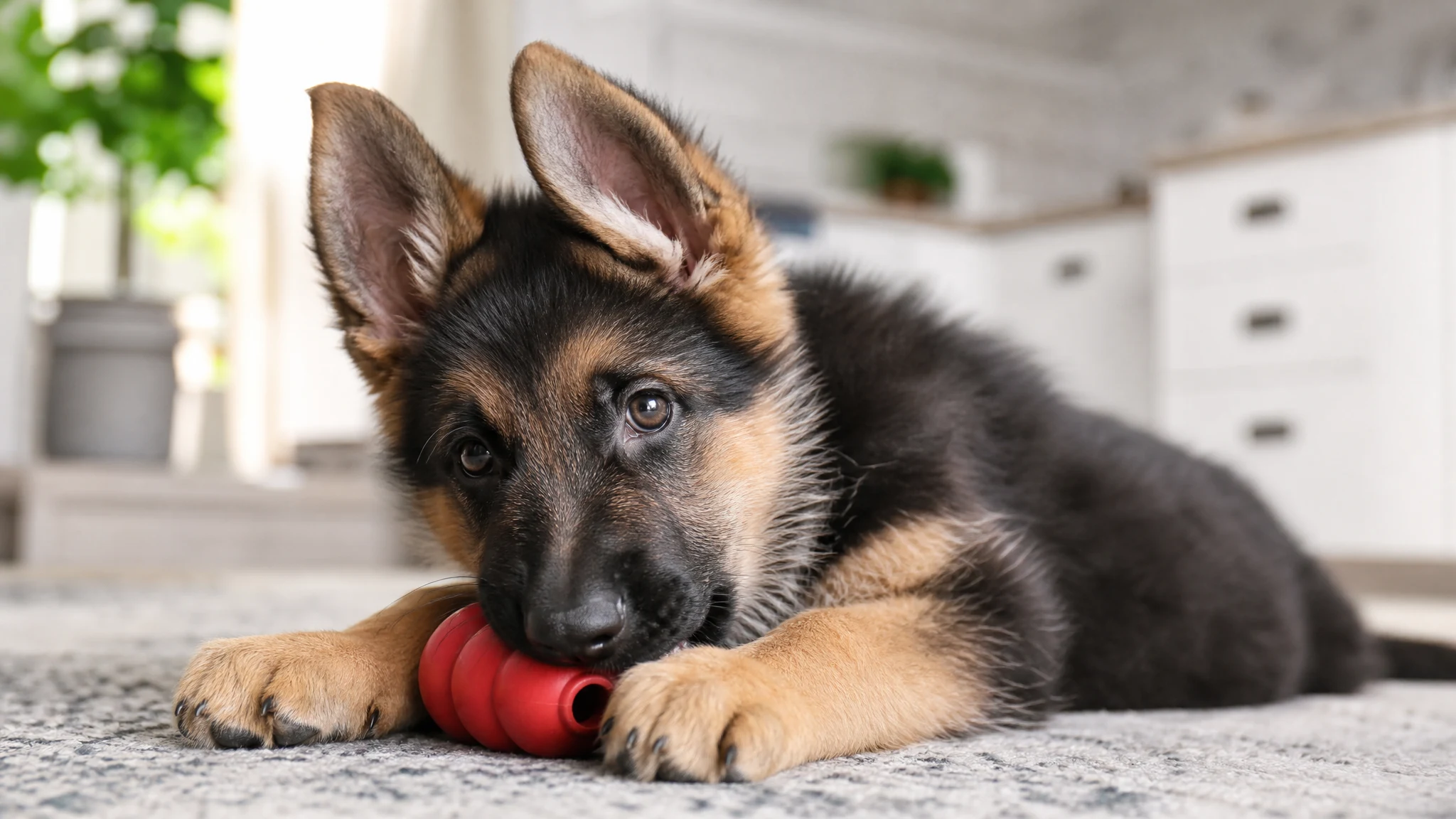
German Shepherd puppy teething is messy, loud and temporary. This page answers common questions about what is normal, which chews are safer at each stage, and what to skip. Where a question depends on one puppy's mouth, the honest answer is to ask your veterinarian.
Understanding German Shepherd puppy teething
When does German Shepherd puppy teething start?
Teething starts in the first months of life, when baby teeth loosen and adult teeth push in. The German Shepherd Dog Club of America's breed page gives no teething calendar, and I found no breed source with one. Your veterinarian can check your puppy's teeth at a routine visit.
How long does teething last?
It runs for a period of months, not days. A large breed may take a little while to finish, and the stages overlap. Ask your veterinarian to confirm that adult teeth are coming in normally.
What are the signs of teething?
Common signs are more chewing than usual, sore or red gums, drooling, and small baby teeth found on the floor. Some puppies eat less for a day or two because their mouths hurt. Ongoing appetite loss or a very sore mouth is a reason to call your veterinarian.
Is chewing a sign of bad behavior?
No. Chewing is normal for a teething puppy, and it is how young dogs explore. Redirect gently to an approved chew and reward your puppy for choosing it. Scolding or physical corrections do not fit reward-based training, the approach the American Veterinary Society of Animal Behavior supports.
Are retained baby teeth a concern?
Sometimes a baby tooth stays in place while the adult tooth comes in beside it. Only a veterinarian can judge whether that needs attention. Do not pull a loose tooth yourself.
What makes a chew safe
What counts as a safe chew for a German Shepherd puppy?
A safer chew is sized so it cannot be swallowed whole, is not harder than your puppy's teeth can handle, and does not break into sharp or swallowable pieces. Large puppies need larger items than a small-dog toy. Ask your veterinarian about specific products, since I cannot vouch for any chew by name.
How hard is too hard?
Many owners use a simple check: if you would not want to be hit on the knee with it, it may be too hard for teeth. A chew should flex a little or give slightly under pressure. Very hard items can crack teeth, and a cracked tooth in a growing puppy is a veterinary problem.
Does size matter for a German Shepherd?
Yes. Hill's Pet Nutrition lists the breed as large, with adults often 50 to 90 pounds. A chew that fits entirely in the mouth can become a choking or blockage risk, so pick pieces too big to swallow whole.
Why supervise chewing?
Even a well-chosen chew can be chewed into chunks. Watch your puppy, take the chew away when it gets small or starts breaking apart, and replace worn items. Do not leave a puppy alone with chews.
Do labels or dental seals help?
A label can tell you the ingredients and calories, but it does not prove a chew is safe for your puppy's teeth. Check with your veterinarian and look at the Veterinary Oral Health Council and AVMA guidance directly for current wording. Be skeptical of marketing words like "long lasting" or "natural."
Chews by stage
What is best while baby teeth are loosening?
Soft, flexible rubber toys and cool, soft items tend to soothe sore gums. Avoid anything rigid, since baby and new adult teeth are both vulnerable. A cool, damp washcloth that you supervise closely is a common comfort option, and you should remove it if your puppy starts shredding it.
What changes once adult teeth are coming in?
Chewing gets stronger as the jaw grows. Move up in size, not hardness, and keep checking toys for cracks, splits or loose pieces. Keep reward-based redirection going, because this is when furniture and shoes take a beating.
What about after teething is done?
Adult dogs still need appropriate chews, and the same safety rules apply. The adult teeth are permanent, so a cracked tooth matters even more. Ask your veterinarian about dental care for a dog of this breed and size.
What to avoid
Are cooked bones safe?
No. Cooked bones can splinter into sharp pieces that may injure the mouth or gut, and they are hard enough to crack teeth. Skip them for a puppy, and ask your veterinarian before offering any bone.
What about antlers and other very hard chews?
Antlers, hooves and similar hard items are a common cause of tooth fractures in dogs. A growing puppy with a mix of baby and adult teeth is even more at risk. A softer, flexible option is the more cautious choice.
What are the concerns with rawhide?
Veterinary groups, including the AVMA, have raised concerns about rawhide, such as choking, blockage and contamination. I did not pull exact wording for this page, so read the AVMA's current guidance and ask your veterinarian. Many owners skip it for a puppy.
Is it a problem if my puppy gulps chews?
Fast eating can matter for this breed. The Merck Veterinary Manual lists German Shepherd Dogs as an at-risk breed for gastric dilatation and volvulus (bloat), with fast eating among the risk factors. Take away any chew your puppy tries to swallow in big pieces, and ask your veterinarian about feeding habits.
Chews, calories and growth
Do chews count toward daily calories?
Edible chews do. Many have real calories, and they add up on top of meals. The Orthopedic Foundation for Animals says keeping a dog from becoming overweight reduces stress on the hips, and hip and elbow problems are a known concern in this breed.
How do I account for them?
Check the chew's package for calories, then trim the meal amount slightly on days you give one. Treat the food bag's feeding guide as a starting point only. Royal Canin's German Shepherd Puppy page, for example, lists daily amounts by age and target adult weight, and your veterinarian helps adjust from there.
Should chews change my puppy's food choice?
Chews do not replace a complete puppy food. For a large breed, look for an AAFCO statement that says "including growth of large size dogs (70 lb. or more as an adult)." Whole Dog Journal notes that too much calcium can cause bone and joint problems in large-breed puppies, so the main diet matters more than any chew. Our label comparison of puppy foods for German Shepherds walks through the label data. We compared labels only and did not run feeding or taste trials.
Can a chew or food prevent joint problems?
No chew or food can promise that. Diet is one environmental factor among several, and a veterinarian decides what is right for an individual dog. For hip and elbow questions, the OFA is the place to read about screening.
When to call the veterinarian
What signs after chewing need a call?
Call if you see a broken tooth, bleeding gums, repeated vomiting, a swollen belly, pawing at the mouth, or a puppy that stops eating. Do not wait if a chew piece may have been swallowed whole. Your veterinarian or an emergency clinic can tell you what to do next.
Sources
- German Shepherd Dog Club of America, About the breed
- Hill's Pet Nutrition, German Shepherd breed page
- Orthopedic Foundation for Animals, Hip Dysplasia
- Merck Veterinary Manual, Gastric Dilation and Volvulus in Small Animals
- Whole Dog Journal, nutritional adequacy statements
- Royal Canin US, German Shepherd Puppy product page