Feeding Station Setup for a German Shepherd Puppy's First Year
General nutrition information compiled from product labels and published sources, not veterinary advice. Your veterinarian is the right person to choose a diet for your dog, especially one with a health condition.
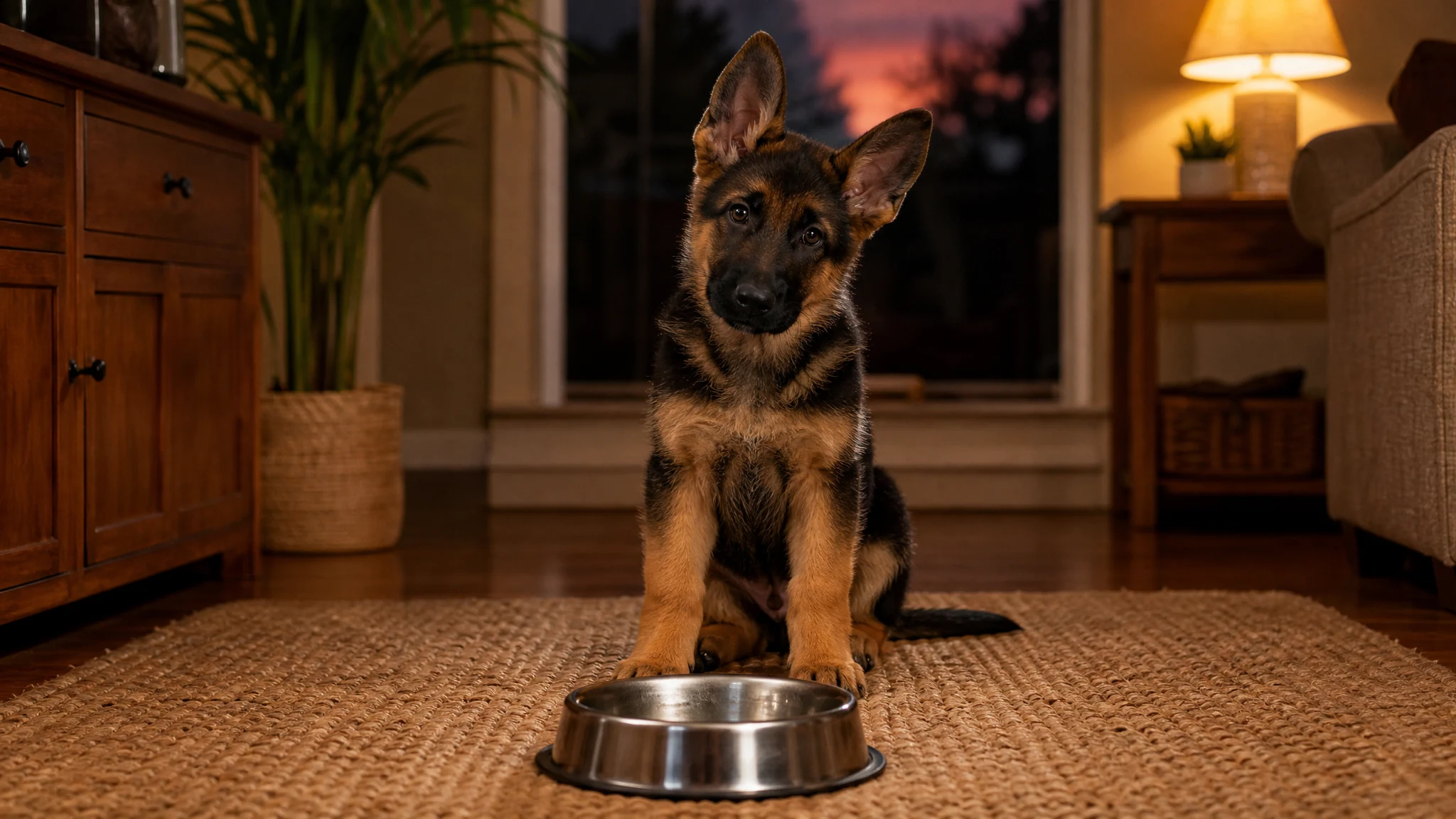
A German Shepherd puppy grows fast, eats with enthusiasm and will test every part of your routine. A well-planned dog feeding station makes mealtimes calmer. It also makes it easier to measure food, spot changes in appetite and keep the puppy lean while the bones and joints develop.
This guide walks through what to gather, how to build the station, and how to adjust it as your puppy grows. It does not replace your veterinarian. Your vet decides amounts and food choices for your individual dog.
Why the Setup Matters for This Breed
The Hill's Pet Nutrition breed page classes the German Shepherd as a large breed. It gives an adult weight of 50 to 90 pounds, with males heavier. A puppy that will end up that size needs steady, controlled growth rather than a rush.
Two points from reliable sources shape how you build a feeding station:
- Weight control. The Orthopedic Foundation for Animals (OFA) says that keeping a dog from becoming overweight reduces mechanical stress on the hips. Hill's notes the breed is prone to developmental joint disorders. Measured portions and a written log help you stay on top of this.
- Eating speed and meal pattern. The Merck Veterinary Manual lists German Shepherd Dogs as an at-risk breed for gastric dilatation-volvulus (GDV, often called bloat). It names once-daily feeding, dry kibble only and fast eating among the risk factors, and advises several small meals. Your station can be built to slow down gulping and to support a split-meal routine.
None of this means a feeding setup can promise freedom from illness. It means a good routine removes some avoidable problems and gives your vet clearer information at checkups.
Materials You Need
Keep the list short. You can find most of these at home or in any pet aisle.
- Two food bowls. Stainless steel or ceramic are easy to wash. Heavy or non-slip bases stop skating across the floor.
- A water bowl or fountain that stays full, kept near but separate from the food bowl.
- A slow-feeder bowl or a lick mat for puppies that gulp. This directly addresses the fast-eating risk factor Merck lists.
- A washable, waterproof mat to catch spills and water splashes.
- A dry measuring cup. Use the same one every time. Label guides are written in cups or grams, so a kitchen scale is a useful extra.
- An airtight food container for dry food. Keep the bag's label information with it, such as the product name and best-by date.
- A notebook or phone note for a simple feeding log.
- A small treat pouch for training rewards, so treats are counted as part of the day's food.
- The feeding guide from the brand's own page or bag, plus our German Shepherd puppy feeding chart for context.
Step-by-Step Setup
Step 1: Pick the Spot
Choose a quiet corner of the kitchen or utility room with a floor that wipes clean. Avoid doorways, stairs and the middle of family traffic. A puppy that is bumped or startled while eating may bolt food or start guarding the bowl.
Place the mat against a wall so the bowl cannot be pushed far. Put water on one side and the food bowl on the other, with a little space between them.
Step 2: Choose and Check the Food First
The station is built around one food, so settle that before buying anything else. Read the adequacy statement on the label. A puppy that may reach or approach 70 pounds as an adult needs a statement that says the food is formulated for growth including growth of large size dogs (70 lb. or more as an adult).
This wording comes from the AAFCO rule that states mirror in their regulations, such as Kentucky's 012 KAR 003:039. Foods that carry the other wording, "except for growth of large size dogs," do not meet the large-size growth levels. Whole Dog Journal also says too much calcium can cause bone and joint abnormalities in large-breed puppies, and Hill's says controlled calcium and phosphorus support skeletal development in puppy formulas.
Some labels that fit the large-size wording, based on the brand pages:
- Royal Canin German Shepherd Puppy, a dry food whose statement covers growth including large size dogs. Its page lists feeding amounts by puppy age from 2 to 12 months and by expected adult weight of 57, 77 or 97 pounds.
- Hill's Science Diet Puppy Large Breed Chicken & Brown Rice, which lists 387 kcal per cup and says its feeding amounts should be adjusted to maintain optimal weight.
- VICTOR Hi-Pro Plus Large Breed Puppy, an all life stages food that includes growth of large size dogs, with a feeding chart by age and weight in cups per day.
We compared label data only. We did not run feeding trials or taste tests, so this is not a ranking. Calories differ between foods, so the cup amount for one is not the same as for another. Ask your veterinarian which food suits your puppy.
Step 3: Set Up Measuring and Storage
Keep the measuring cup and scale next to the food container so the habit is easy. Level the cup each time rather than scooping heaped portions.
Store dry food in its original bag inside the airtight container. The bag carries the lot code and date, which matter if the brand ever issues a notice. Keep the container off the floor and away from heat.
If you use a fresh or gently cooked food, follow the brand's refrigeration or freezer instructions. The brand's own page and packaging are the place to check them.
Step 4: Write Down the Starting Amount
Look up your puppy's age and expected adult weight on the brand's feeding guide. Treat the number as a starting point, not a target. Label guides are averages, and puppies vary.
Write the daily total at the top of your log, then divide it into the number of meals your vet recommends. Merck advises several small meals for at-risk breeds, and one VICTOR product page, for its Grain Free Active Dog & Puppy formula, describes feeding in four intervals spaced through the day. Your vet can tell you what split fits your puppy's age.
Confirm amounts with your veterinarian, especially during the large-breed growth period. Faster growth is not the goal. Our feeding chart guide explains how to read label amounts by age and weight.
Step 5: Build the Mealtime Routine
Feed at the same times each day, in the same spot, using the same cue word. Predictable meals help with house training because puppies tend to need a toilet break after eating.
- Ask the puppy to sit and wait for a moment. Reward calm behavior with the bowl.
- Set the bowl on the mat and let the puppy eat without interruption.
- Pick up the bowl when the puppy finishes or after about 15 to 20 minutes. Do not leave food out all day. Free feeding makes portions hard to track.
- Offer a calm walk or toilet trip afterward, and keep play gentle for a while after meals.
Use only gentle, reward-based methods. If your puppy guards the bowl, do not push, scold or take food by force. The American Veterinary Society of Animal Behavior (AVSAB) supports reward-based training. Instead, walk past and drop something better into the bowl, then walk away. Ask a qualified positive-reinforcement trainer or your vet for help if guarding continues.
Step 6: Add the Slow-Down Tools if Needed
If your puppy empties the bowl in seconds, move to a slow-feeder bowl or spread kibble across a lick mat or clean baking tray. Start with an easy design so the puppy does not get frustrated.
Do not use gadgets that make mealtime stressful. The aim is a relaxed pace.
Step 7: Track Weight and Body Shape
Weigh the puppy on a schedule that your vet suggests, and note the number in the log. Between visits, feel the ribs. You should be able to feel them under a light layer of coat and muscle without seeing them sharply. Ask your vet to show you how to score body condition.
Add treats to the daily total. Training rewards can add up, and extra calories are an easy way for portions to creep up. Many owners set aside a portion of the daily kibble as training rewards.
Adjusting the Station Through the First Year
The setup stays the same, but the details change as your puppy grows.
- Early weeks at home. Keep the same food the breeder or shelter used at first, then switch only if your vet advises it. The Hill's lamb meal large-breed page, for one, says to switch foods gradually over 7 days.
- Months of rapid growth. Re-check the label amount against your puppy's current weight and age. Raise bowls or mats only if your puppy needs it, and wash them daily.
- Adolescence. Appetite can rise and fall. Keep to the log and avoid topping up with extra food just because the bowl is empty.
- Approaching a year. No source in our research gives a breed-specific age for moving from puppy to adult food. Hill's lists Adult as 12 months to 7 years in its general food navigation, and Royal Canin's German Shepherd puppy page gives feeding amounts through 12 months. Large breeds are often kept on growth food longer, so ask your vet when to change.
Tips for a Smoother Setup
- Wash bowls after every meal. Dried food residue and saliva build up quickly.
- Keep water available at all times, and refresh it often.
- Move the puppy's bowl to the same place if you travel, or pack the mat so the routine feels familiar.
- Keep children from reaching into the bowl while the puppy eats. Teach them to drop treats in from a distance instead.
- Note any changes in stool, appetite or weight. Hill's says the breed has a documented predisposition to exocrine pancreatic insufficiency (EPI), where signs include weight loss with normal appetite and abnormal stools. Report patterns like these to your vet rather than changing food on your own.
Common Mistakes to Avoid
- Feeding once a day. Merck lists once-daily feeding as a GDV risk factor.
- Guessing portions by eye. A "scoop" varies a lot. Measure each meal.
- Using an adult or "except for large size dogs" food. Check the adequacy statement for large-size growth wording.
- Adding supplements on your own. Extra calcium in particular is a concern for large-breed puppies, according to Whole Dog Journal. Talk to your vet before adding anything. Do not rely on a bag, a website or a forum for amounts.
- Chasing the grain-free label. The FDA's diet and dilated cardiomyopathy (DCM) investigation has not established a causal link between specific diets and DCM, and its last public update was dated December 23, 2022. Choose based on the adequacy statement and your vet's advice, not fear or fashion.
- Switching foods suddenly. Changes should be gradual, as brand pages advise.
- Vigorous play or exercise right after meals. Keep things calm, and ask your vet how long to wait.
- Treating a bowl dispute with force. Alpha rolls, scruffing or taking food by force raise stress and can make guarding worse. They are not part of reward-based training.
What to Expect
A consistent feeding station may help mealtimes become calmer and more predictable within a few weeks. Many owners find it easier to notice when appetite changes, because the routine and the log give a baseline. A slow-feeder bowl may reduce gulping for some puppies, though results vary by dog.
Careful measuring and regular weight checks may also help you keep your puppy in a healthy body condition. That does not guarantee any health outcome. Hip and elbow conditions, for example, have genetic and environmental causes, and diet is only one piece. Your veterinarian is the right person to judge growth, body condition and any special needs.
A Quick Checklist
- Quiet corner with a washable mat.
- Food with large-size growth wording on the label.
- Measuring cup or scale, kept next to the food.
- Daily total divided into several small meals, confirmed with your vet.
- Same times, same spot, calm routine.
- Log of amounts, treats, stool and weight.
- Regular review with your vet as your puppy grows.
Sources
- Hill's Pet Nutrition, German Shepherd breed page
- Orthopedic Foundation for Animals, Hip Dysplasia
- Merck Veterinary Manual, Gastric Dilatation and Volvulus in Small Animals
- Whole Dog Journal, In the Fine Print: Nutritional Adequacy Statements
- Kentucky Administrative Regulations, 012 KAR 003:039
- FDA CVM, Investigation into Potential Link between Certain Diets and Canine Dilated Cardiomyopathy
- Royal Canin, German Shepherd Puppy product page
- Hill's Science Diet Puppy Large Breed Chicken & Brown Rice product page
- VICTOR Hi-Pro Plus Large Breed Puppy product page